Insoles and Arch Support: What They Can and Cannot Fix
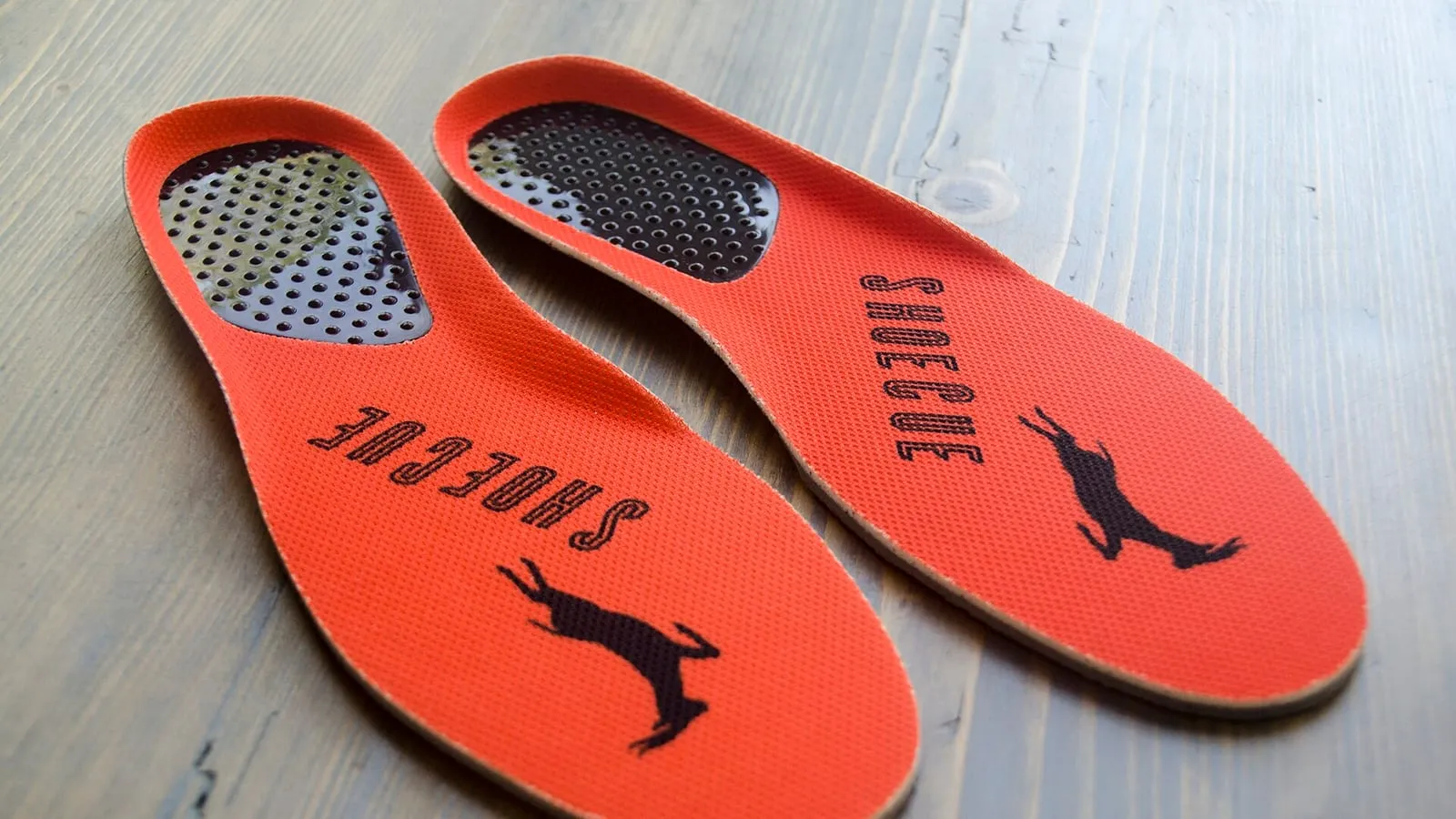
Insoles are sold as a cure for almost everything underfoot, from aching arches to tight shoes to tired legs at the end of the day. Some of that is true and some of it is not, and the difference comes down to a simple question: what can a flat insert actually change inside a shoe that has already been built to a fixed shape?
This article sets out what an insole can do, what it cannot, and how to judge whether the one you are considering will help or simply make the shoe too tight. It covers the difference between the insert a shoe comes with and the ones sold separately, and it explains why arch height is not a ranking from bad to good.
What an insole can change
An insole sits between your foot and the shoe’s own footbed. It can change several things at once.
- Cushioning. A softer or thicker insert absorbs more of the impact of each step. This is most noticeable on hard pavements and hard-soled shoes.
- Surface feel. Texture and material underfoot change how the shoe feels and how much your foot slides.
- Slight support. A shaped insert can hold the midfoot or the heel a little more firmly than the shoe alone.
- Fill. An insert can take up space in a shoe that is slightly too large, or reduce pressure from a footbed that has worn hollow.
- Warmth and moisture. Some inserts insulate or manage sweat better than a bare insole.
What all of these have in common is that they work on the space above the shoe’s footbed. They do not change the shoe’s outline.
The volume cost nobody mentions
The most common mistake with aftermarket insoles is forgetting that they take up room. A shoe has a fixed internal volume. Adding a few millimetres of insert reduces the height available for your foot, which presses the toes against the upper and the instep against the laces.
If a shoe fits well already, an extra insert will usually make it too shallow. If a shoe is a little roomy, an insert is an efficient fix. As a rule, you should only add an insole of any thickness to a shoe that has spare volume, and you should remove the shoe’s original insert first if it is removable, rather than stacking the two. Stacking is the single most reliable way to ruin a fit.
Arch height is not a ranking
Arch support is often presented as though more is better, as if a higher arch were an upgrade. It is not. A support contour that is too high for your foot pushes up into the arch, which many people find uncomfortable after an hour, and it can tilt the foot in a way that changes how the heel sits.
The right amount of support is the amount that matches your foot. A foot with a low or flat arch usually has more contact with the ground through the middle, and a gently contoured insert can feel comfortable without forcing the arch upward. A foot with a high arch often has a smaller contact patch and benefits from cushioning under the midfoot rather than a hard, tall ridge. In neither case is the goal to raise the arch to some standard height.
Different feet, different needs
It helps to think in terms of what each kind of foot tends to find comfortable, while remembering that comfort is personal.
Flat or low-arched feet often want a supportive but not aggressive insert, one that fills the space under the midfoot rather than pressing into it. They may also benefit from a shoe with a straighter last and a firm heel.
High-arched feet frequently want cushioning and shock absorption, because a smaller area takes the whole load. A soft insert with a mild contour is often more useful than a rigid one.
Plantar fascia discomfort, the sharp pain under the heel that is worst on the first steps of the morning, is a common reason people buy inserts. A softer heel and gentle arch fill can feel better underfoot, but persistent or worsening pain is a matter for a clinician rather than a shop.
Tired, aching feet after long standing are often helped more by cushioning and a shoe that fits than by any particular arch shape.
What an insole cannot do
This is the part that saves money. An insole cannot change the shoe’s length or width. It cannot turn a narrow last into a wide one, or make a short shoe longer. If your toes are crowded against the sides of the toe box, no insert will open that space; it will only reduce the room further.
An insole also cannot correct the lasting of a shoe that flexes in the wrong place, and it cannot make a stiff, badly shaped upper comfortable. It cannot substitute for a proper fit, and it cannot change the shape of the bones in your foot. Where an insole helps, it is by adding comfort, cushioning and a little support, not by rebuilding the shoe.
Be sceptical of claims that an insert will fix a structural problem on its own. Anything that genuinely changes how the foot is supported is usually made to a cast or a measurement of the foot, and is fitted by someone who can adjust it.
Choosing and fitting an insert
If you decide to try one, treat it as you would a shoe.
- Check that your shoe has removable insoles and enough volume to spare.
- Take the original insole out and compare its outline with the new one; a longer insert will curl at the toes or heel.
- Put the new insert in, then put the shoe on and walk on a hard floor, not carpet.
- Check the toes and instep again. If either is now tight, the insert is too thick for that shoe.
- Give it a few short wears, then decide.
If an insert must be trimmed to fit, trim from the toe end and check frequently, because hasty cutting cannot be undone.
When to see a professional
Inserts bought off a shelf are generic shapes made to fit an average foot. If your feet are painful, changing shape, numb, or if one foot differs markedly from the other, a shop is the wrong place to look for an answer. A clinician or a qualified orthotist can assess what is happening, and if a custom device is appropriate, they can make one that matches your foot.
An insole is a small adjustment to comfort, not a repair for the foot. Used within that limit, it is a useful and inexpensive tool. Used as a substitute for a shoe that fits, it will disappoint.