Cleaning and Conditioning Shoes by Material
A single cleaning routine applied to every shoe is a good way to damage half of them. Water that is fine on rubber can stain suede; a brush that lifts dirt from mesh can scrub the finish off coated leather. The material decides the method, and getting the order right matters as much as choosing the product.
This article goes through the main shoe materials one at a time, setting out what each can and cannot tolerate, and then describes a cleaning routine that works in the same general sequence whatever the material. It ends with the point that is easy to forget: how often you clean matters more than what you clean with.
Clean first, condition second
Two operations are often confused. Cleaning removes dirt, salt and surface grime. Conditioning replaces oils that have been lost from leather and keeps it supple. Cleaning always comes first, because a conditioner applied over dirt seals the dirt in, and because some cleaners strip oils that conditioning then restores.
A sensible order for any material is to remove loose dirt dry, treat marks locally, then clean the whole surface, then, for leather only, condition. Doing the easy dry stage first prevents you from grinding grit into the material with a cloth.
Buffing is the step most often skipped. After cleaning, a soft brush or cloth removes the last of the loosened dirt and lifts the surface of suede and nubuck, and it takes only seconds. Leaving a cleaning product to dry on the surface attracts new dirt and can leave a dull film, so wipe or buff it off rather than letting it sit.
Smooth leather
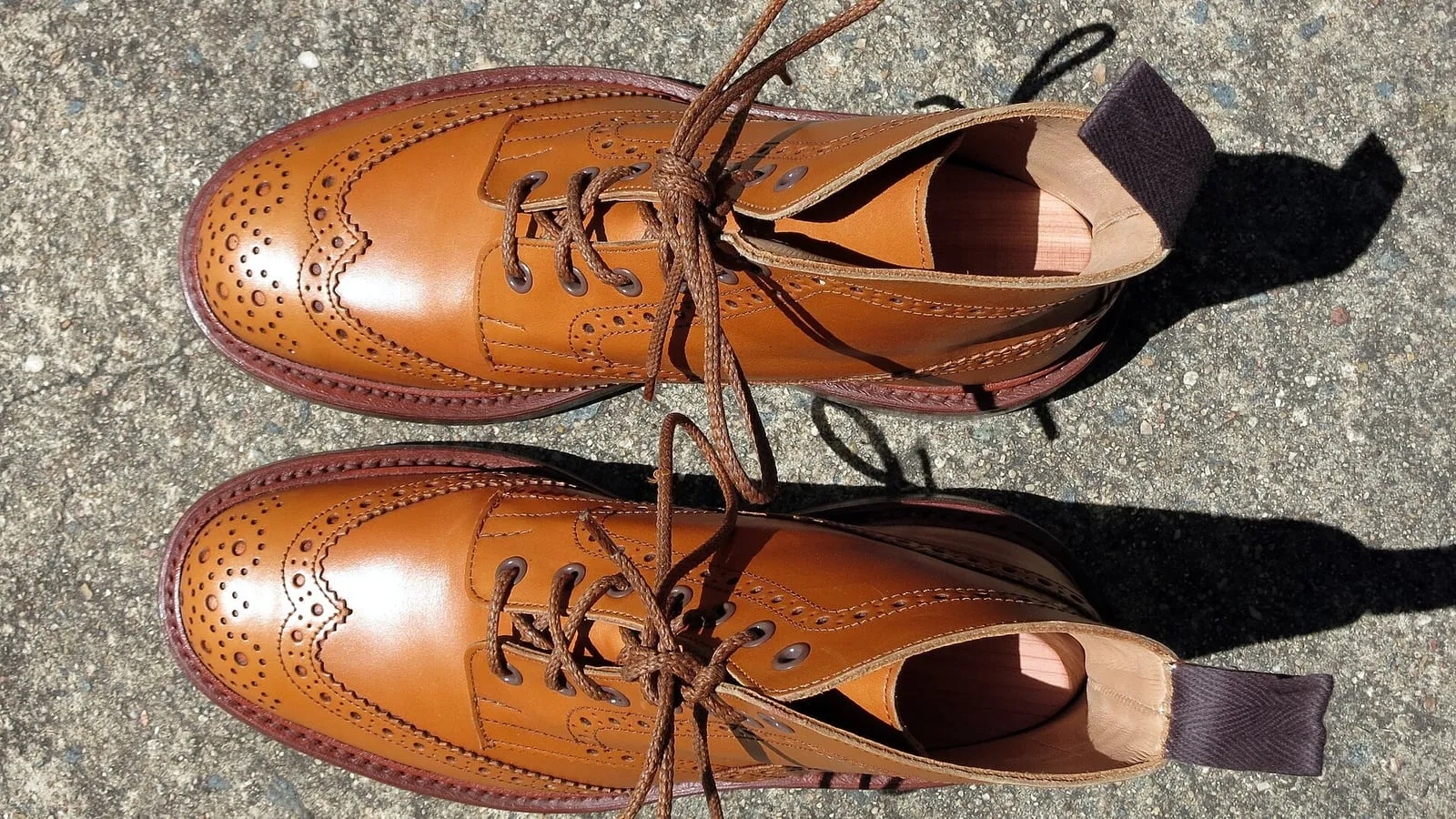
Smooth, finished leather is the most forgiving material. Water is safe in small amounts, and a soft cloth is enough for ordinary dust.
Wipe the surface with a barely damp cloth to remove dust and salt, then use a small amount of leather cleaner on a cloth for grime. Work in small circles and do not soak the leather. For salt tides in winter, a diluted vinegar solution on a cloth, rinsed off afterwards, dissolves the salt, but test first on an unseen area, and dry the shoe away from heat.
Conditioning is what keeps leather from drying and cracking. A small amount, worked in with a cloth and left to soak in, is enough. Too much leaves a greasy surface that attracts dirt and clogs the pores. Once every few weeks of wear is usually plenty; more in dry conditions or after repeated wetting, less if the shoe is rarely worn.
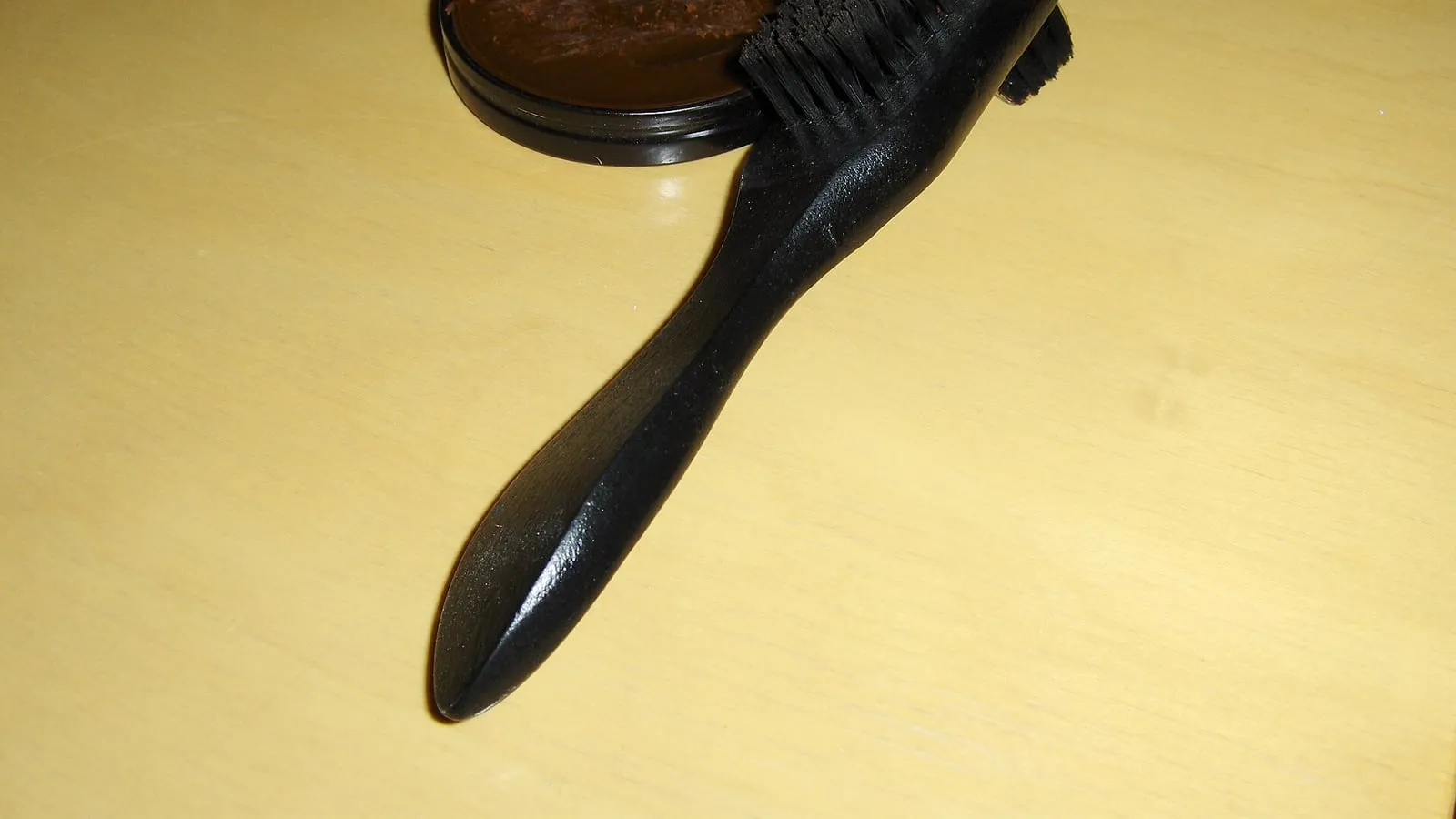
Polish is a separate step. It adds colour and a protective layer and is useful for dress leather, but it is not a substitute for cleaning and conditioning. Use it sparingly and buff off the excess.
Suede and nubuck
Suede and nubuck are leather with a raised, matte surface, and they are the materials most easily ruined by a well-meant cleaning. Water can leave a tide mark, and a wet cloth can flatten the nap permanently in that spot.
Deal with them dry. Use a soft brush or a suede-specific brush to lift dust and restore the nap, always brushing in one direction. For marks, use a suede eraser or a specialist cleaner, and test on a hidden area first. If the suede becomes wet, let it dry naturally, away from heat, then brush the nap back up.
Protect suede before it gets dirty rather than cleaning it afterwards. A spray protector that repels water and stains, applied to a clean, dry shoe, is the most useful thing you can do for it.
Textile and mesh
Woven and knitted uppers, common on trainers, are easy to clean but can discolour if treated carelessly. Most are synthetic fibres that tolerate a gentle detergent solution.
Remove loose dirt with a soft brush, then use a cloth or soft brush dampened in a mild soap solution, working with the weave rather than against it. Rinse by wiping with a clean damp cloth, and avoid saturating the shoe, because water can carry dirt into the padding and lining. White mesh shows every smudge, so clean the whole panel rather than a single spot, which leaves a visible clean patch.
Do not put textile shoes in a washing machine unless the maker says they may be, and do not tumble dry them. Heat can shrink, deform and delaminate the sole.
Synthetic leather
Synthetic leather, whether polyurethane or another polymer, has a plastic surface that wipes clean easily. That is its advantage and also its weakness: the finish is a coating, and harsh cleaners, solvents or abrasive pads will dull it and can lift it.
Use a damp cloth with a mild soap solution, then wipe clean. Avoid alcohol-based products and acetone, which attack the surface. Synthetic material does not absorb conditioner, so feeding it is pointless; what it needs is protection from abrasion, and a light application of a suitable protector can help.
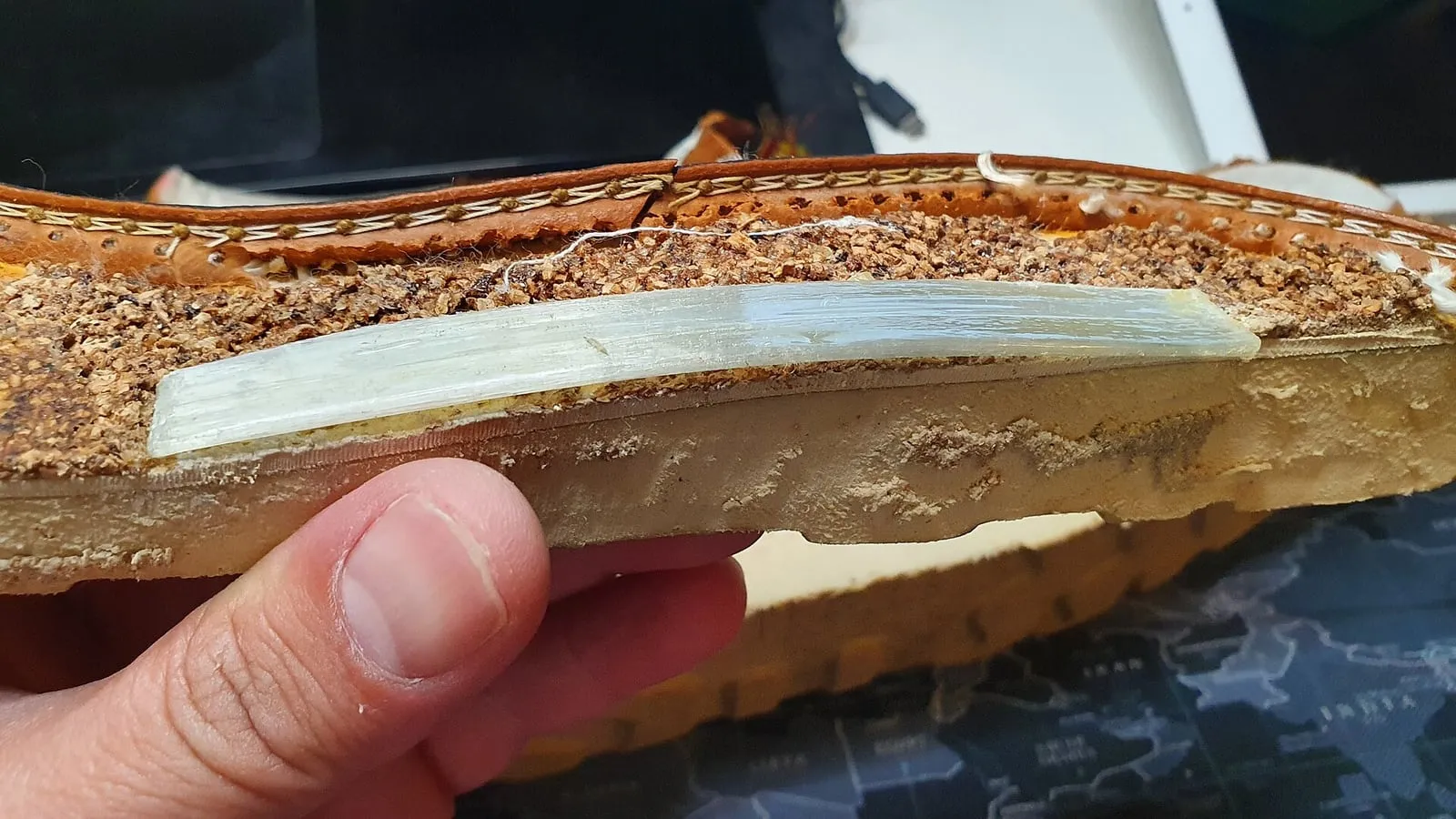
The place synthetic leather fails first is the flexing crease across the toes, where the coating cracks. Keeping that area clean helps a little, but the failure is inherent to the material.
Rubber and soles
Soles and midsoles can be scrubbed more firmly than uppers. A stiff brush and soapy water will lift mud and grit, and a little bicarbonate of soda can help with scuffs on white rubber.
Clean soles before the upper, not after, so that dirt from the sole does not end up on the material above it. This also prevents you from scrubbing the upper with the same dirty cloth. Check the tread for embedded stones, which can work their way in and split the rubber.
Frequency beats product choice
It is tempting to think that the right product matters most. In practice, a cheap cleaner used regularly keeps a shoe in far better condition than an expensive one used twice a year. Dirt left on leather abrades it; salt left on in winter dries it; grit left in the flexing crease cuts the fibres each time you walk.
The habits that matter most are these:
- Brush or wipe shoes after each wear, before putting them away.
- Deal with mud and salt the same day they arrive.
- Dry shoes naturally, with trees, before storing.
- Condition leather often in small amounts rather than rarely in large ones.
- Protect suede and delicate materials before they need cleaning.
None of this requires expensive products. It requires only that you do it often, and that you match the method to the material in front of you.