Rotating Your Shoes: Why Drying Time Matters More Than Polish
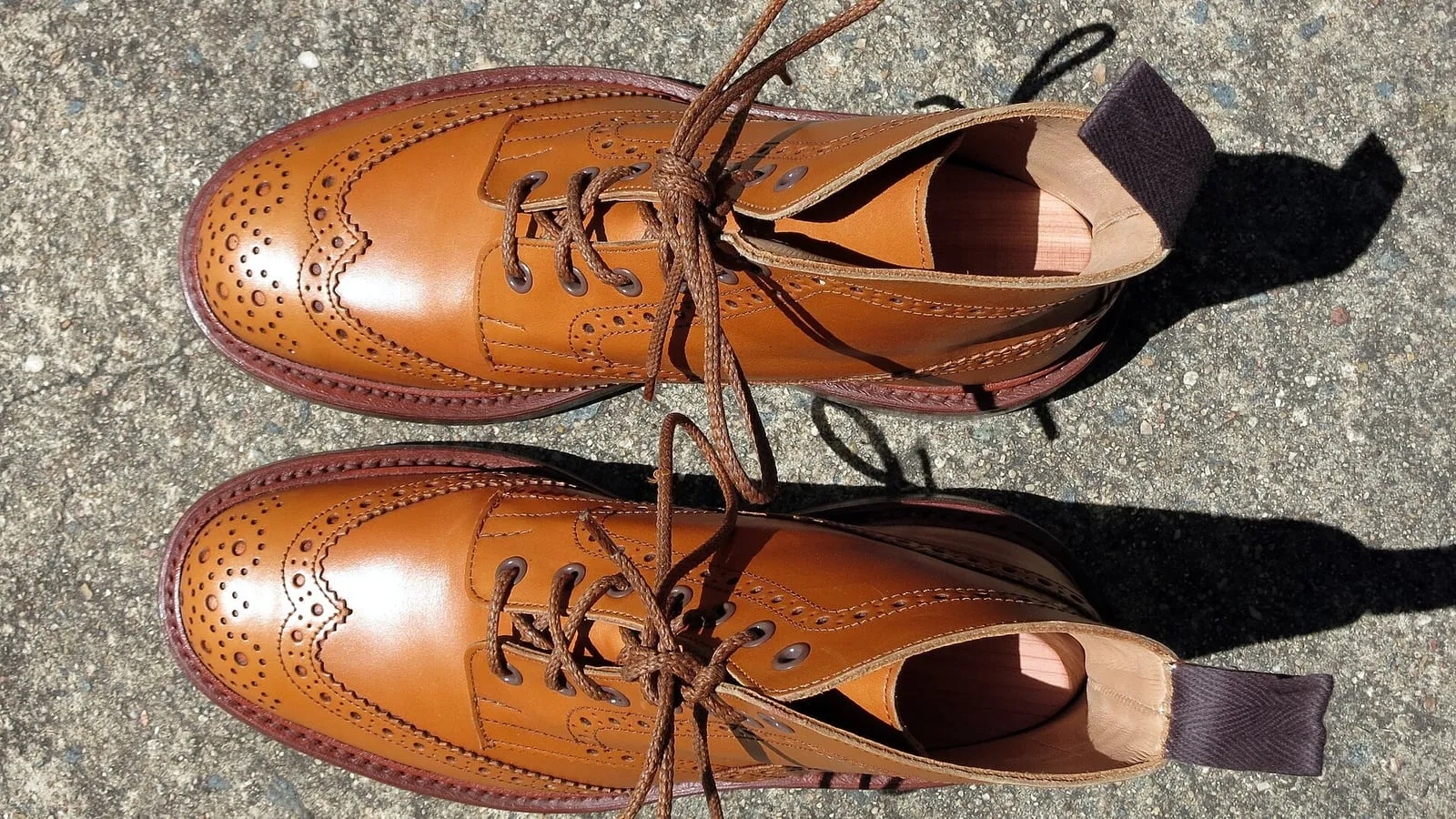
A pair of shoes worn every day wears out faster than the same pair worn every other day, and the reason is not simply the extra mileage. It is moisture. Feet sweat, leather absorbs that moisture, and a shoe that never dries never fully recovers its shape. Rotation is the practice of giving shoes that recovery time.
This article explains what moisture does to a shoe, why drying matters more than polishing, and how to store and rotate pairs sensibly in different climates. It also covers the useful distinction between removing an odour and merely covering it.
The case for drying time
Leather is porous and hygroscopic: it takes in and releases water vapour. During a day of wear, a shoe absorbs perspiration from the foot and, in wet weather, water from outside. The material swells slightly as it takes on moisture and relaxes as it dries.
A shoe that is worn every day is put back on while still damp inside. The leather never returns to its dry state, the fibres stay swollen, and the shape the shoe held begins to soften and collapse. The insole, which takes the worst of the sweat, becomes compressed and sour. Over months, a continuously worn shoe simply ages faster than one that is allowed to dry.
The rule of thumb is a day of rest for every day of wear, and two days after heavy rain or a long, sweaty day.
What moisture does to a shoe
Understanding the damage makes the habit easier to keep.
- Leather loses shape. Wet fibres are more mobile, so the shoe can collapse into folds or sag at the heel while damp.
- The bond weakens. Cemented soles and glued linings are stressed each time the material swells and shrinks. Repeated cycles can open a bond.
- Stitching suffers. Thread in a damp shoe can rot over time, especially cotton thread in older shoes.
- The insole compacts. The insole takes direct sweat and, once compacted, does not spring back. This is why the footbed of a heavily worn shoe feels hard.
- Odour develops. Odour is produced by bacteria that thrive in damp, warm conditions inside the shoe. Drying is the most effective response.
- Salt marks appear. In winter, road salt and de-icing grit dry on leather and pull moisture from it, leaving white tides that stiffen the material.
Trees, and what they really do
A shoe tree is a shaped form inserted when the shoe comes off. Its main job is to hold the shoe’s shape while it dries, so the leather sets in its proper form instead of in the creases left by the foot. A tree also speeds drying slightly by drawing moisture from the inside, and, if it is cedar, it adds a pleasant smell.
Trees do not stretch a shoe that is too small, and they do not sterilise it. What they do well is support the shape during the vulnerable drying period. Use them after every wear, and choose one that fills the shoe without forcing it. For boots, a boot tree or a pair of rolled newspapers does the same job.
Do not dry shoes on a radiator, in front of a fire or in a hot car. Strong heat drives the moisture out unevenly, cracks finishes and shrinks leather. Air at room temperature is what you want.
Rotation in practice
Rotation does not require many pairs. Two is enough to make a difference.
- Wear one pair on one day and the other on the next.
- On taking them off, loosen the laces, put in the trees and set them somewhere airy, not in a closed cupboard.
- Let them dry for at least a full day, more in damp conditions.
- Alternate, and keep a third pair for wet weather if you can, so your best shoes are not the ones caught in the rain.
If you own only one pair, do what you can: take them off in the evening rather than wearing them until bed, use trees, and let them air overnight away from heat. It is not as good as a day of rest, but it is much better than nothing.
A common objection is that rotation means buying more shoes, which is only partly true. Two pairs worn alternately will together outlast two pairs worn one after the other, because each is spared the damage of being put back on while still damp inside. If you already own a second pair, rotation is a way of getting more from both without spending anything further.
Damp and cold climates
In wet or humid places, drying needs more help. Stuff the shoes with crumpled newspaper, which absorbs moisture, and change the paper when it becomes damp. Rotate more often, and accept that leather will need more conditioning to replace the oils that water and salt strip out.
In winter, rinse road salt off leather and rubber with a damp cloth and let the shoes dry before conditioning. Salt left on the surface draws moisture from the leather and stiffens it. Never force-dry boots by the fire after a wet walk; let them dry slowly and reshape them with trees while damp.
Smell is a symptom
Persistent odour means the inside of the shoe is staying damp, usually because it is worn too often or stored in a closed, airless place. Deodorising sprays mask the smell for a few hours; drying removes its cause.
Useful measures are rotation, trees, and removable insoles that can be taken out and dried separately. Powder or inserts can help absorb moisture, but they work best alongside drying rather than instead of it. If odour persists despite drying, the inside of the shoe may be colonised and worn beyond easy recovery, and replacing the insole, or the shoe, is often the practical answer.
Storage for the season
Shoes put away for months need a little attention first. Clean them, let them dry fully, condition leather lightly and put in trees. Store them somewhere dry and airy, not in a sealed plastic bag, which traps moisture, and not in a damp cellar or loft. Protect suede and delicate finishes from rubbing against other shoes.
When rotation is not the answer
Rotation slows wear, but it does not reverse it. If a shoe has collapsed at the heel, if the midsole is flat, or if the upper has cracked, giving it more rest days will not bring it back. Rotation is maintenance for shoes that are still sound. For a pair whose structure has gone, more rest will only postpone the point at which you notice it.