How to Measure Your Feet at Home
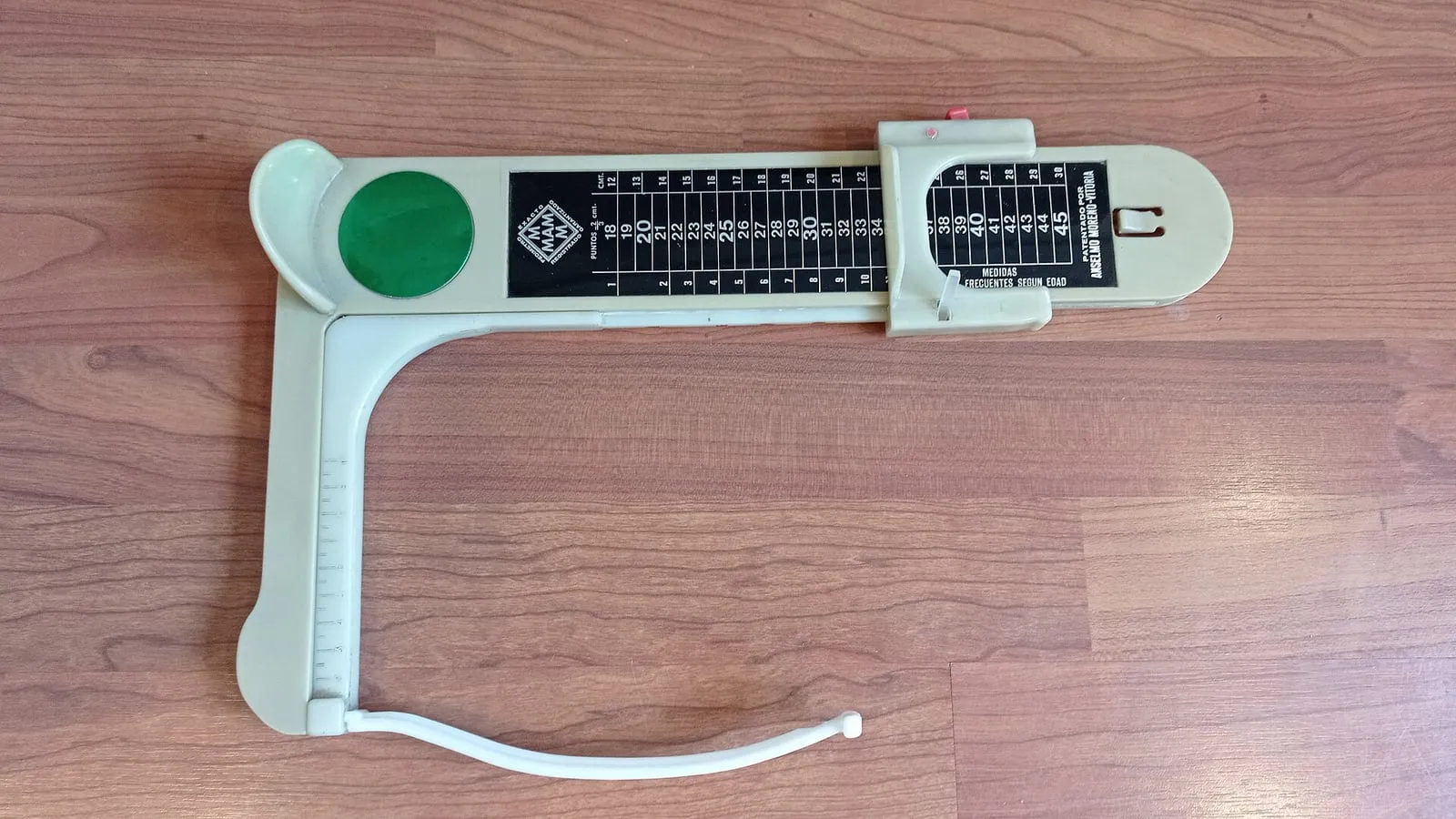
Most people have never measured their feet. They know the size they were given as a teenager, and they have been buying variations of it ever since, absorbing the differences between brands as a personal failing rather than a measurement problem. Five minutes with a sheet of paper fixes this.
Do it in the evening, standing up
Feet change size during the day. Walking, standing and warmth cause them to spread slightly, and the difference between a morning and an evening measurement is commonly a few millimetres — enough to change a size recommendation.
Stand up when you measure. Your foot lengthens and widens under body weight, and a measurement taken sitting down will be too small. Measure both feet, and use the larger one. Almost nobody has two feet of exactly the same size, and the difference is often half a size.
The paper method
Put a sheet of A4 or letter paper on a hard floor with one edge against a wall. Stand on it with your heel against the wall and your weight evenly distributed. Have someone else draw, or reach down carefully.
Mark the tip of your longest toe and the widest point on each side of your foot. Then step off and measure three things with a ruler:
- Heel to longest toe. This is your foot length. Note that your longest toe is frequently the second toe, not the big toe.
- Width across the ball. Measure between the two side marks. This is the widest part of your foot, across the joint of the big toe.
- Arch length. Measure from your heel to the ball of your foot. This matters more than people expect, and it is what determines where a shoe flexes.
Write all six numbers down — three per foot. These are your measurements for the next year or so.
Convert length to a size, cautiously
Foot length maps to shoe size, but the mapping is not universal. As a rough guide, a foot of about 25.4 cm sits near a UK 7, an EU 41 or a US 8 in men’s sizing. Each half size is roughly 4 to 5 mm, and each full size about 8 to 10 mm.
The gap between your foot length and the shoe’s internal length is called allowance. You want around 8 to 12 mm of it at the toe, which is about a thumb’s width. Less than that and your toes will hit the front on descents and after long walks. More than that and your foot will slide, which causes blisters and makes the shoe crease in the wrong place.
Width is the measurement people skip
Length gets all the attention, but width is where most fit problems live. Two people with identical foot length can differ by two width grades.
If the widest part of your foot spills over the sole of a shoe, the shoe is too narrow, and going up a length will not fix it — it just moves the problem forward and creates a shoe that is both too long and still too tight. Look for brands and models that publish width options, or for designs with a wider last.
What the numbers do not tell you
Measurements give you a starting point, not a guaranteed fit. Three things still vary between shoes:
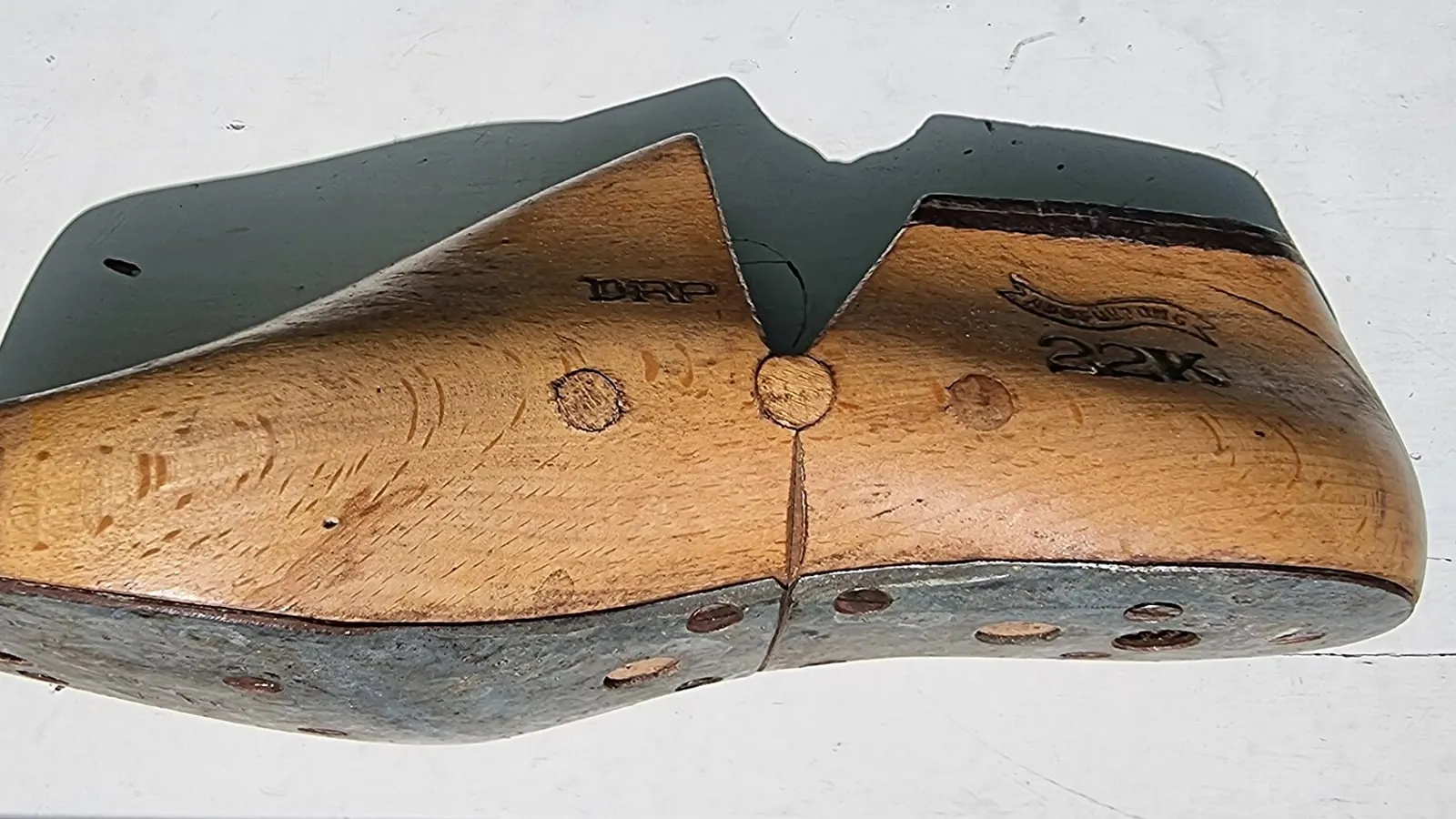
Last shape. The internal volume of a shoe is not its external footprint. A pointed toe box can have the same length as a round one and half the usable space.
Upper material. Leather relaxes and takes the shape of your foot over a few weeks. Synthetic uppers mostly do not. A leather shoe that is a fraction snug is often the right choice; a synthetic one usually is not.
Sock thickness. Measure in the socks you intend to wear. A winter sock can add a full size.
Measuring children
The method is the same but the interval is not. Children’s feet can grow half a size every few months, so measure every two to three months. Check for toe room by pressing the front of the shoe while the child stands — you want a thumb’s width between the longest toe and the end. Do not buy oversized to “grow into”; a shoe too large causes tripping and encourages a poor gait.
When to re-measure
Measure again if you change weight significantly, if you develop foot pain, or if you notice a favourite pair suddenly feeling different. Feet spread and flatten with age, and it is common for adults to gain a width grade without gaining a length.
Once you have your numbers, use them the way you would use a chest measurement for a jacket: as a filter that rules out most of the wrong options before you start looking.